


Import Credit Card Transactions into QuickBooks Online & Desktop: Step-by-Step Guide

- By Jonathan Browns
- Nov 04, 2026
- Accounting
- 7 min read
Have you received your credit card statement and wondered how to import credit card transactions into QuickBooks? Managing credit card transactions can take a lot of time and may lead to mistakes. If you use QuickBooks to manage business finances/ import credit card transactions can make your work much easier. It helps you keep track of expenses/ record payments/ and maintain accurate financial records.
In this guide, we will walk you through the simple steps to import credit card data into QuickBooks. You will learn the available import methods and the process to resolve common issues you may face during the process.
Understanding Credit Card Transactions in QuickBooks
Credit card transactions in QuickBooks are records of all the purchases/ payments/ and other expenses made through the business credit card. These transactions help you keep track of where your business money is being spent. You can view your credit card activity in one place when you connect credit card to QuickBooks/ import transactions. This makes it convenient to monitor business expenses/ check payments/ and maintain accurate financial records.
QuickBooks allows you to review and categorize credit card transactions into the correct expense accounts. For example, you can categorize office supplies/ travel costs/ fuel/ and other business purchases. You can add them to your books and reconcile your credit card account with your bank statement. This helps you avoid duplicate entries/ track expenses/ and keep business accounts organized.
Important Things to Remember Before Importing Credit Card Transactions
Make sure you meet these basic requirements to import a credit card bank feed into QuickBooks:
- Supported File Format – Use a supported format such as CSV/ QBO/ QFX/ or OFX.
- Credit Card Account – Make sure your credit card account is set up in QuickBooks.
- Correct Details – Check transaction dates/ amounts/ and descriptions.
- File Format – Ensure your CSV file has proper column headings and formats.
- Avoid Duplicates – Check existing records.
- Backup Data – Create a company file backup before importing into QuickBooks Desktop.
- Internet Connection – Ensure a stable connection with QuickBooks Online.
Benefits of Importing Credit Card Bank Feed into QuickBooks
It is beneficial to import CSV transactions QuickBooks, which makes it convenient to manage business expenses and maintain accurate financial records. Here are the main benefits:
| Benefits | Explanation |
| Saves Time | Downloads credit card transactions and reduces manual data entry. |
| Automatic Updates | Keeps credit card transactions updated through automatic bank feeds. |
| Easy Expense Tracking | Helps you review and categorize business expenses in one place. |
| Reduces Manual Errors | Minimizes mistakes caused by manually entering transaction details. |
| Easy Transaction Matching | Allows you to match downloaded transactions with existing QuickBooks records. |
| Better Financial Tracking | Provides a clearer view of business expenses and cash flow. |
| Simplifies Reconciliation | Makes it easier to compare imported transactions with your credit card statement. |
| Multiple Account Management | Allows you to connect multiple eligible bank and credit card accounts. |
Note: QuickBooks downloads transactions automatically to connect credit card to QuickBooks. However, you must review/ download/ and categorize credit card transactions to books.
How to Import Credit Card Transactions into QuickBooks Online?
You can connect your credit card account/ manually upload credit card statement to QuickBooks Online. It is useful if your bank does not connect/ for older transactions. QuickBooks Online accepts various file formats like CSV, QBO, QFX, and OFX.
Upload an Account Statement as an Image/ PDF
AI extracts the info from the account statement and imports it into QuickBooks Online when you upload a PDF/ image.
- Access All apps, then go to Accounting and select Bank transactions.
- If the desired account tile is visible, click it.
- Choose Upload from file from the Link account dropdown. If your account is not linked to online banking, select Upload from file/ upload transactions manually.
- Upload the account statement as a PDF/ image file from your computer.
Note: Some items may need review and our experts will check your statement for accuracy. You will be notified on the Bank transactions page once it is ready.
- Select the account for the transaction upload in the QuickBooks account dropdown.
Note: New QuickBooks users may need to select the Add New option to create an account if none are available.
- Click Continue.
- Check the side-by-side view of your statement and QuickBooks’ extraction to make edits as required for accuracy.
- Click Save to see the transactions on your Bank transactions page for that account.
Note: Connect your bank and credit card accounts to QuickBooks Online account to automatically download your latest transactions.
Upload a List of Transactions
Use .csv, .txt, .qbo, or .ofx file types to upload credit card statement to QuickBooks. You can include up to 1,000 lines, with each line representing one transaction.
- Navigate to All apps/ then go to Accounting/ and choose Bank transactions.
- If there is a tile for the account into which you want to upload transactions, click on it.
- Select the Link account dropdown menu and choose Upload from file. If your account is not yet linked with online banking, choose Upload from file/ choose manual transaction upload.
- Choose Drag and drop/ select files/ and pick the file you obtained from your bank.
- Then click Continue.
- Move to the account you intend to upload the transactions into in the QuickBooks account dropdown menu.
Note: If you are new to QB, you might not have an account set up to upload credit card statement to QuickBooks. If you cannot find one, click Add New from the dropdown to establish a new bank account.
- Click Continue.
- Align the columns in your file with the appropriate fields in QuickBooks. Then click Continue.
- Select the transactions you wish to import QBO file QuickBooks. After that, click Continue.
- Click Yes and select Done.
Note: QuickBooks may add extra details if it recognizes transaction descriptions/ based on your banking rules.
How to Import Credit Card Transactions into QuickBooks Desktop?
If you are using QuickBooks Desktop and want to import credit card transactions without manual entry, do so through a Web Connect (.QBO) file from your bank/ credit card provider. This method streamlines the process and keeps your records updated.
Follow the steps to import your transactions:
- Access the Banking option.
- Pick Bank Feeds.
- Select Banking Center.
- From the list of Bank Accounts, choose the specific account you wish to link.
- Click on Download Transactions to obtain the transactions.
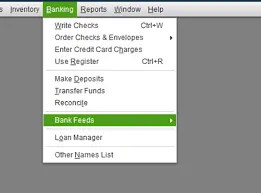
- Select Synchronize.
- Opt for Sync all for this Bank to link all accounts associated with the same bank.
- Enter your PIN or password.
- Click OK.
What File Formats Does QuickBooks Support for Credit Card Imports?
QuickBooks supports different file formats to upload credit card statements to QuickBooks based on whether you use QuickBooks Online/ QuickBooks Desktop.
- CSV (.csv) – Supported by QB Online to import CSV transactions using formatted columns.
- QBO (.qbo) – QuickBooks Web Connect format/ used for QuickBooks credit card reconciliation.
- QFX (.qfx) – Quicken file format supported for manual transaction uploads in QBO.
- OFX (.ofx) – Open Financial Exchange format supported to import QBO file QuickBooks Online.
- TXT (.txt) – Supported for transaction uploads in QuickBooks Online where the applicable upload option is available.
Note: QuickBooks Desktop uses the QBO format for importing bank and credit card transactions through Web Connect. CSV and Excel files are used for other supported Desktop data imports, not direct Web Connect imports.
How to Manage and Record Credit Card Transactions in QuickBooks?
Managing credit card transactions in QuickBooks allows you to track business expenses/ payments/ and balances. You can record purchases/ categorize expenses/ review transactions/ and monitor payments.
Follow these steps for effective credit card management:
- Navigate to + New.
- Select either Check or Expense.
- Choose a Payee from the list provided.
- Pick the Bank Account, Cash Account, or Credit Card that you used for the transaction.
- In the Category details section, use the dropdown menu to select the appropriate tax category.
- Input the Amount of the purchase.
- Hit Save and close or Save and new.
The second step is to reimburse the company for any personal expenses. This helps keep the business’s financial records accurate by ensuring that they reflect only business expenditures. Here is how to do it:
- Select the + New button.
- Choose Bank Deposit.
- Select the Account to which you want to add the reimbursement, and specify the Date.
- Navigate to the Add funds to this deposit section.
- Input the name of the person who incurred the personal expense in the Received From field.
- Then, select the account.
Tip: If the person is not already in your records, add them as a customer. Even if they are not a customer, this is the most effective choice.
- Choose the Payment Method and input the reimbursement amount.
- Click Save and close or Save and new.
Common Credit Card Import Problems in QuickBooks and Their Solutions
You may face some common issues when it comes to importing credit card transactions into QuickBooks Online or Desktop. Below are the credit card transaction import errors and their solutions:
| Common Problems | Solutions |
| Unsupported File Format | Use a supported file format. QuickBooks Desktop Web Connect requires a QBO file. |
| Incorrect CSV Formatting | Check column headings, date formats, and transaction amounts before uploading. |
| Duplicate Transactions | Check existing records and avoid importing overlapping date ranges. |
| Incorrect Account Selection | Select the correct credit card account to import QBO file QuickBooks. |
| Invalid Transaction Amount | Check the amount format and remove transactions that QuickBooks cannot process. |
| Bank Connection Error | Check your bank notifications and contact your financial institution if found any credit card transaction import errors. |
| QBO File Import Error | Download a fresh QBO file directly from your bank and try importing it again. |
| Upload Timeout | Wait a few minutes and upload the file again. |
How to Troubleshoot Missing/ Incorrect Credit Card Transactions?
If your credit card transactions are missing or incorrect in QuickBooks, it may be due to pending transactions/ an outdated bank connection/ or incorrect categorization. Follow their recommended steps to resolve the problems.
Method 1: Update Your Bank Connection
If you have changed your bank account number/ username/ or password on your bank’s website, ensure that QuickBooks reflects the updated information.
- Navigate to All apps/ followed by Accounting/ and then Bank transactions.
- Click on the account card related to the bank account you are handling.
Note: If the account card is not visible, click the dropdown menu next to your bank account and then choose Show account cards.
- Select Edit and click on Edit sign-in info.
- Input your revised bank details.
- Press Save and connect.
Method 2: Exclude a Downloaded Transaction
Once you determine that omitting a transaction is appropriate, here is how to proceed:
Exclude a Transaction in QuickBooks on the Web
- Navigate to All apps/ then Accounting/ and then Bank transactions.
- Click on the Pending tab.
- Check the box next to the transactions you wish to exclude.
- Click Exclude.
The transaction will then transfer to the Excluded tab on the Banking page.
Note: If you mistakenly exclude the wrong transaction, it is simple to correct. Just go to the Excluded tab/ check the box for the transaction/ and click Undo. The transaction will return to the For review tab so you can reconsider your options.
Exclude a Transaction in QuickBooks for Android
- Access the Menu and choose Transactions.
- Click on Review transactions.
- Choose the transactions you want to exclude, then tap the trash can icon.
- Press Confirm.
Exclude a Transaction in QuickBooks for iOS
- Access the Menu and choose Transactions.
- Click on Review transactions.
- Select the transactions to exclude, then tap the trash can icon.
- Press Exclude.
Method 3: Check Transaction History
Follow the steps for your specific version to check credit card transaction history in QuickBooks Online or QuickBooks Desktop:
For QuickBooks Online
- Click the Gear Icon in the upper-right corner of QuickBooks Online.
- Select Chart of Accounts under Your Company.
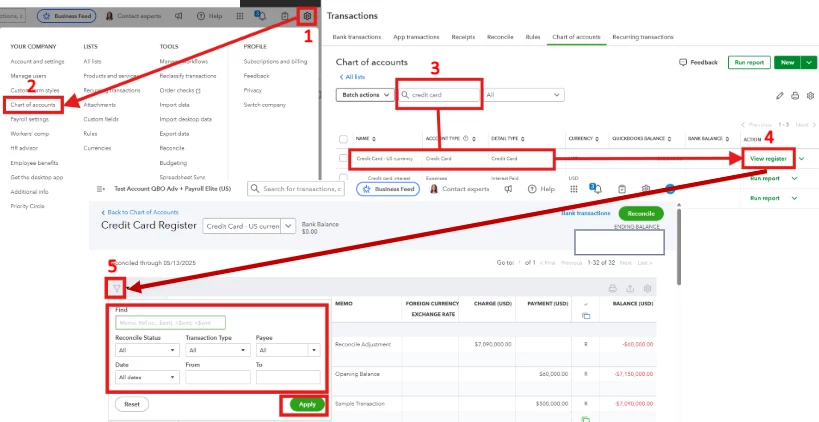
- Find your credit card account, using the Search bar if needed.
- Click View Register next to the credit card account to see all transactions.
- Use the Filter icon and the Date field to narrow down the transactions to a specific timeframe.
For QuickBooks Desktop
- Open QuickBooks Desktop and go to the Lists menu.
- Select Chart of Accounts.
- Find and highlight your credit card account.
- Right-click and choose Use Register or press Ctrl + R.
- The register will show all charges, payments, and credits.
- Use the Sort feature or scroll to find specific past charges.
Method 4: Fix Incorrect Transaction Duplicate
If QuickBooks cannot find a matching transaction you have entered, do not create a new one. Instead, locate the transaction to avoid duplicates.
Find and Match the Correct Transaction
- Navigate to All apps/ then choose Accounting/ followed by Bank transactions.
- Locate the bank transaction you wish to match.
- Click on the Suggested AI Icon in the Categorize/ Match column.
- The AI will offer matching suggestions for transactions that are similar to the one you selected.
- Identify the match for your chosen transaction.
Note: Selecting a transaction from the suggested matches will take you to the Invoice page.
- Choose the appropriate match and select the category from the Category dropdown menu.
- Finally, click Post.
Strategies To Manage Credit Card Transactions in QuickBooks
Managing credit card transactions in QuickBooks helps you track business expenses. Follow these simple tips to keep your credit card accounts organized:
- Check imported transactions to recognize missing/ incorrect entries.
- Assign transactions to the correct expense categories.
- Match existing transactions before adding new ones.
- Compare QuickBooks records with your monthly credit card statements.
- Refresh the bank connection to download all latest transactions.
- Make sure all credit card payments and purchases are recorded correctly.
- Back up your QuickBooks Desktop company file to protect your financial data.
- Review your account balance regularly to identify discrepancies.
Conclusion
The process to import credit card transactions into QuickBooks is simple. It helps to save time/ manage business expenses/ and keep your financial records accurate. Whether you use QuickBooks Online/QuickBooks Desktop, it is best to choose the correct import method and supported file format. Make sure to review/ categorize/ and reconcile your imported transactions to avoid duplicate entries. Manage your credit card transactions with ease through the above-outlined steps and tips.
Still facing challenges with QuickBooks credit card imports? Don’t let complicated transactions hold your business back. Get in touch with the BizBooksAdvice experts for reliable assistance. Contact them at Call Us : +1-866-408-0444 and let our experts assist you manage your financial tasks.
Frequently Asked Questions:
Does QuickBooks allow credit card transactions?
Yes! QB allows users to manage and record credit card transactions through QuickBooks Online & Desktop. Users can connect their credit card accounts to QuickBooks Online to download and categorize eligible transactions. They can import transactions using supported file formats such as CSV/ QBO/ and OFX based on the import method. QuickBooks allows businesses to record credit card purchases/ payments/ refunds/ and expenses to maintain accurate financial records.
How to add credit card transactions in QuickBooks Desktop?
Open the company file and navigate to Banking > Enter Credit Card Charges to add credit card transactions in QuickBooks Desktop. Select the appropriate credit card account from the Credit Card dropdown menu and choose Purchase/Charge to record a new purchase/ Refund/Credit to enter a refund. Enter the vendor name/ transaction date/ reference number/ and amount. Select the appropriate expense account/ item and add a description or memo if needed under the Expenses or Items tab.
How to post credit card transactions in QuickBooks?
Open company file and select the appropriate credit card account from the Chart of Accounts to post credit card transactions in QuickBooks. Navigate to Banking \> Enter Credit Card Charges in QuickBooks Desktop. Go to Transactions \> Bank transactions to review downloaded credit card activity in QuickBooks Online. Enter/ review the transaction date/ vendor name/ amount/ and expense category. Add a description/ memo if required. Review and categorize them before selecting Add/ Post when transactions are downloaded from a connected credit card account.
Why are my credit card transactions not showing up in QuickBooks Online?
Credit card transactions may not show up in QuickBooks Online due to bank connection issues and outdated account information. Sometimes, transactions are missing because the credit card account is disconnected/ the bank has not processed the transactions. Check your bank connection/ review the transaction date range/ and refresh the bank feed to resolve this issue. If transactions are still missing, contact your bank to restore transaction updates.
Can I import credit card transactions into QuickBooks?
Yes! You can import CSV transactions QuickBooks Online and QuickBooks Desktop using supported file formats. You can upload a supported transaction file through the Bank transactions section in QuickBooks Online. Select credit card account and follow the import instructions. You can use Bank Feeds/ compatible file import options to add credit card transactions in QuickBooks Desktop.
Why is QuickBooks not importing all bank transactions?
QuickBooks may not import all bank transactions due to connection issues/ delays from bank/ etc. Missing transactions can be pending/ downloaded/ or filtered out. Check bank connection and ensure the file format is supported. If issues persist, contact your bank/ QuickBooks Support for help.
How do I import data into QuickBooks Online?
Sign in and go to Settings > Import Data to import data into QuickBooks Online. Choose the data type (like customers or invoices)/ prepare your file in CSV/ Excel/ Google Sheets/ and use the provided sample file for formatting. Upload your file/ map the columns to QuickBooks fields/ check for errors/ and select Import to complete the process.
Can I link my credit cards to QuickBooks?
You can link credit card accounts to QuickBooks Online to download and track transactions. Sign in to QuickBooks/ go to Transactions > Bank transactions/ click Link account/ find your credit card provider/ and enter your login credentials. Connect the credit card to the correct account in your Chart of Accounts. Once linked, QuickBooks will download transactions/ simplify expense tracking/ and reduce manual data entry.
About The Author

Jonathan Browns
Jonathan Brown is a trained QuickBooks professional with 10 years of experience in the accounting sector. Moreover, he is passionate about helping businesses reduce the stress of managing accounts. Also, he is proficient in assisting entrepreneurs and small business owners to use QuickBooks and enhance their accounting experience.

Recent Posts
-
Celebrate QuickBooks Thanksgiving Day & Simplify Your Accounting
-
QuickBooks Cyber Monday Sale: Unlock Huge Savings in 2026
-
Find Out the Best Deals & Discounts in QuickBooks Black Friday Sale
-
QuickBooks Auto Data Recovery Tool: A Complete Guide
-
QuickBooks Running Slow? Causes and Fixes for Desktop & Online