


How to File IRS Form 1040 Smoothly Using QuickBooks

- By Jonathan Browns
- May 16, 2026
- Taxation
- 7 min read
Every year, when the tax season arrives, it comes with a lot of responsibility to accurately file taxes at the right time. If you are also stressed about how to file your IRS Form 1040, then you are at the right spot. The Form 1040 is a tax form that is used by U.S. taxpayers for filing an annual income tax return. However, it is also necessary for the taxpayers to file other types of 1040 tax forms according to their income and deductions they are claiming, like Schedule A or Schedule C.
Herein, in this guide, you will get to know who needs to file the 1040 tax form, the deadline to file it, the steps for filing, and the penalties for late filing.
Getting issues while filing IRS Form 1040? Dial the IRS Form 1040 Support Number Call Us : +1-866-408-0444 and obtain the right assistance.
What is File IRS Form 1040?
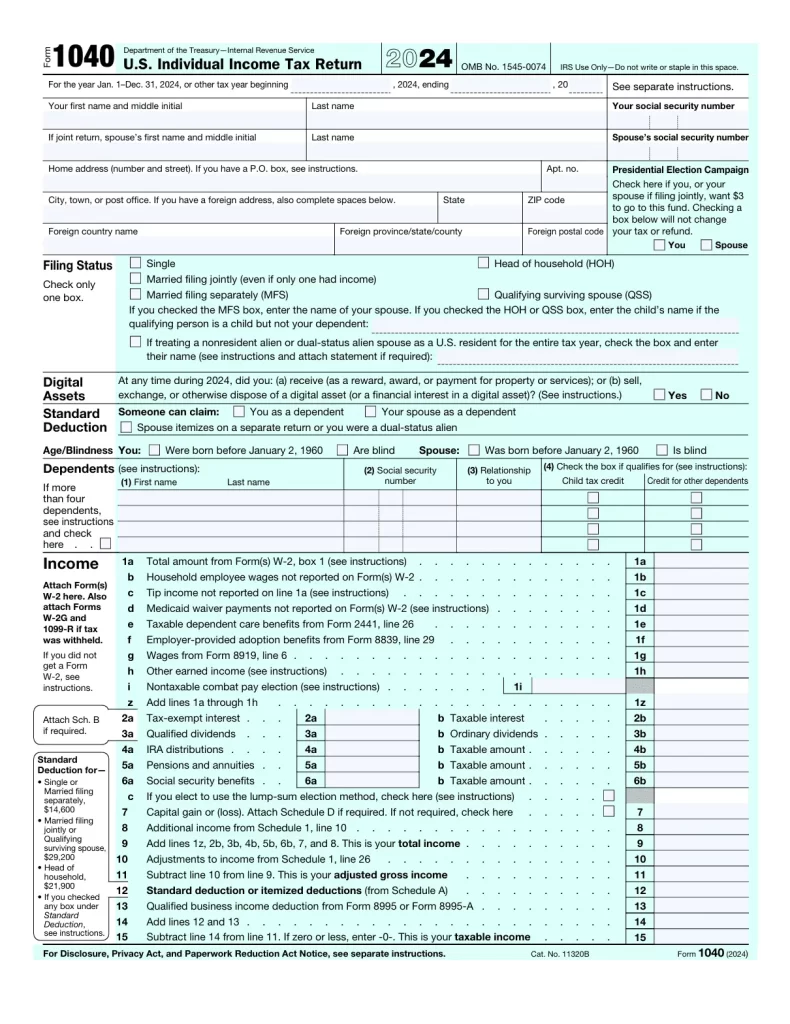
The File IRS Form 1040, U.S. Individual Income Tax Return, is mainly required for filing personal (individual) federal income tax returns to the IRS. Also, it is used to calculate the taxes due or the refund they received. Moreover, this form is segregated into different sections, which enable you to report your taxable income for the year, including the deductions and credits you’re entitled to claim.
Who Needs to File a 1040 Form?
If you are a U.S. citizen or permanent resident and your income meets a threshold, then you are supposed to file the 1040 tax return.
| Filing Status | Younger Than 65 | 65 or Older |
| Single | $14,600 | $16,550 |
| Head of Household | $21,900 | $23,850 |
| Married Filing Jointly | $29,200 (both spouse under 65) | $30,750 (one spouse over 65) $32,300 (both spouses over 65) |
| Qualifying surviving spouse | $29,200 | $30,750 |
| Married Filing Separately | $5 | $5 |
What Are the Different Types of 1040 Form?
There are different kinds of 1040 tax forms, and filing the correct form according to the taxpayer’s situation is important. So, below, we have described all of these forms and who needs to file them for better clarification.
1. Form 1040 (U.S. Individual Income Tax Return)
This is the standard tax form used by U.S. taxpayers for reporting income, deductions, and credits, determining tax owed or refund due. This tax form covers the following filing situations:
- Single or married taxpayers
- Taxpayers with dependents
- People with income from jobs, side businesses, investments, or Social Security
- Taxpayers claiming itemized deductions or tax credits.
2. Form 1040-NR (For Non-Resident Aliens)
The Form 1040-NR is used by non-resident aliens for reporting their U.S.-based income and then calculating their federal tax obligations. Also, this form consists of the following details:
- Foreign students on F, J, M, or Q visas
- International investors with U.S. income
- People who live in the U.S. and work temporarily
- It cannot be filled “jointly.”
3. Form 1040-SR (For seniors aged 65 and older)
This is the taxation form type generated for taxpayers 65 and older. Moreover, it also comprises the following information:
- The Form 1040-SR is quite similar to the standard 1040 form.
- Also, it is beneficial for the seniors who are receiving Social Security & retirement income.
- Above all, this form uses the larger text and contains a chart that allows senior citizens to calculate their standard deductions.
4. Form 1040-X (Amended U.S. Individual Income Tax Return)
This IRS taxation form is filed to amend or correct a previously submitted tax return, which adjusts previously reported income, credits, or deductions. Moreover, this form is required in the following scenarios:
- If you have missed reporting some income.
- The IRS sends you a notice prompting you to make the changes.
- When you have claimed a credit or deduction you have qualified for.
Documents Required Before Filing 1040 Form
Before you file the 1040 Tax Form 2025, get ready with the following documents and personal details for the uninterrupted tax-filing experience.
1. Personal Information & Identification
- Provide the legal name, current address, and your date of birth.
- You also need a Social Security Number (SSN) or Individual Taxpayer Identification Number (ITIN) for yourself, your spouse while filing jointly, and for all dependents.
- Also, include the bank account and routing numbers for direct deposit of a refund or electronic payment of taxes owed.
- IP PIN if it’s issued by the IRS.
- Spouse Details
- Filing Status
- Prior Year Details
- Mention the Adjusted Gross Income from last year’s tax return if you are filing electronically.
2. Income Documentation
Herein, you have to collect all those forms that are used for reporting the income received throughout the year.
- Form W-2
- Wages & Salaries
- Interest & Dividends
- Retirement Income
- Self-Employment/Side Jobs
- Other Income
- Investments & Sales
- Unemployment Income
- Schedule K-1 if you have income received from a partnership, S corporation, estate, or any trust.
- Form 1099 from banks, issuing agencies, and other payers.
- Form 1099-DIV for Dividends
- Form 1099-G for certain government payments, including unemployment compensation
- Form 1099-K for income received from payment cards and third-party network transactions.
- Form 1099-R for pension, annuity, or retirement plan distributions.
- Form 1099-INT for interest income
3. Documents For Deductions & Credits
The taxpayers must have the following documents while planning to itemize deductions or claim certain credits.
- Homeownership
- Education Expenses
- Student loan interest statements
- Health Insurance
- IRA Contributions
- Records of charitable donations
- Form 1095-A
- Health Insurance
- Childcare expenses
- Home Mortgage interest statements
- Retirement Contributions
How to Fill Out the 1040 Form?
You will get two pages in the 1040 tax form. On the first page, you have to provide your personal and income figures. On the other side, the second page concentrates on computing your tax liability or refund. Furthermore, carry on with the steps instructed below for filing out the Form 1040 accurately.
First Step: Mention Your Personal Details
Within the first page of the IRS tax form 1040, all you require is to provide the following details, including:
- Social Security Number
- Filing Status (like Single, Married Filing Jointly, or Head of Household). In case you are filing jointly, then
- mention your spouse’s name and SSN.
In case you have dependents, then mention their names, SSNs, and their relationship with you. Moreover, you will also get the checkboxes that represent each dependent who qualifies for the Child Tax Credit or the Credit for Other Dependents.
Second Step: Provide Your Income
After entering the personal details on Page 1, Line 1, you have to report your wages, salaries, and tips that you will get on your W-2 form from your employer. Also, you must attach a copy of your W-2 form along with your return if you are filing by mail.
Other sources through which you will get your income are outlined below:
- Line 2a-2b: Tax-exempt and taxable interest
- Line 3a-3b: Qualified and ordinary dividends
- Line 4a-4b: IRA Distributions
- Line 5a-5b: Pensions and annuities
- Line 6a-6b: Social Security Benefits
- Line 7: capital gain or losses (from Schedule D if applicable)
- Line 8: Other income, including the unemployment benefits or gambling winnings, as reported on Schedule 1.
Third Step: Calculate Your Adjusted Gross Income (AGI)
Now, on Line 9, provide your total income by adding up all the amounts from the previous section. Herein, you can also apply for any eligible above-the-line deductions from Schedule 1, including:
- Educator expenses
- Student loan interest deductions
- IRA Contributions
- Health savings account (HSA) deductions
- Self-employment tax deduction
You need to deduct all these deductions, and it will provide you with your adjusted gross income (AGI) on Line 11.
Fourth Step: Identify Your Deductions & Taxable Income
On your tax form 1040, on line 12, mention either the standard deduction or itemized deductions from Schedule A. The 2026 standard deduction amounts are listed.
- $16,100 for single filers
- $32,200 for married couples for filing jointly
- $24,150 for heads of household
If you qualify for the Qualified Business Income Deduction (QBI), provide the amount on Line 13. Your taxable income will be computed on Line 15, and for that, you need to subtract deductions from AGI.
Fifth Step: Compute Your Tax & Credits
To calculate how much tax you owe, perform the instructions outlined below:
- Determine your tax liability: Within Line 16, mention the amount of tax you owed depending on your taxable income (Line 15). You can access the IRS tax table located in the 1040 instructions to get your tax amount depending on your income.
- Apply Your Tax Credits: If you are eligible for the Child Tax Credit or Credit for Other Dependents, you must mention them on Line 19. Also, you have to mention if there are any non-refundable tax credits; mention them in the correct fields. Also, you must provide the additional credits, including Education Credit, Foreign Tax Credit, and Retirement Savings Contributions Credit, which must be reported on Schedule 3. Then, it must be carried forward to Line 20 of the Form 1040.
- Add Other Taxes: If possible, then report additional taxes, including self-employment tax, the net investment income tax (NIIT), or the alternative minimum tax (AMT). You have to report all these taxes on Schedule 2, and the total is provided on Line 23.
- Calculated Your Total Tax: Herein, you need to sum up your tax liability from Line 16 and any additional taxes from Line 23. Then, you are supposed to enter the final tax amount on Line 24.
- Provide Payments & Withholdings: In case you have tax withheld from wages, pensions, or other income sources, mention these amounts on Line 25 (federal tax withheld). Thereon, you have to add all these payments and withholdings and then mention the total amount on Line 25 d. In case you have made estimated tax payments, then you need to report them on Line 26.
- Identify refund or amount you owed: In case your total payments (Line 33) exceed your total tax liability (Line 24), you are entitled to a refund. You need to mention this amount on Line 34. However, if you owe taxes, deduct total payments (Line 33) from total tax (Line 24). Then, you must insert the amount outstanding on Line 37. Furthermore, you can do the payments electronically via the IRS Direct Pay system or by mailing a check with a Form 1040-V.
What are the Deadlines To File Form 1040?
For filing the 2025 IRS Form 1040, the due date is April 15, 2026. In case the due date comes on a weekend or a legal holiday, then you need to file the form by the next business day.
Request For Extension of Filing 1040 Form
If you are a taxpayer and are not able to file the 1040 form, you can request an extension by the April filing deadline. In that case, you will get the extension until October 15 to file without paying any tax penalties. The following are the different ways to request an extension for filing the tax form.
- You can request an extension with the help of an IRS Free File through the IRS.gov website.
- Also, you have the option to simply pay what you owe using an online payment portal and then tap on extension as the reason for the payment. Later on, you will receive a confirmation number of the extension for their records.
- Moreover, you can also request an extension by mail, online with an IRS e-filing partner, or via a tax expert.
What is the Penalty Charged For Late Filing of the 1040 tax form?
If you owe tax and fail to file the 1040 form on time (with extensions), then you also have to pay the penalty for late filing. The failure-to-file penalty is usually 5% of the tax you owed for each month, or a part of a month that your return is late, around 25%. In case your return is 60 days late, you also have to pay a minimum penalty for late filing. It might be less than $525 (for tax returns to be filed in 2026) or 100% of the tax you owed.
Conclusion
So, we end this post and hope that now you can easily file the IRS Form 1040 timely. Thus, it also helps with filing forms correctly and saves you from late filing of taxes. Furthermore, if you are still struggling while filing the tax form, then feel free to connect with our BizBooksAdvice professionals for better guidance.
Frequently Asked Questions (FAQ’s):-
Question 1: What are the common Form 1040 mistakes?
Ans. The following are the common Form 1040 mistakes made by taxpayers:
- Filing the tax form too early
- Missing or incorrect Social Security Number (SSN)
- Providing Incorrect details
- Inappropriate Filing status
- Wrong Bank Account numbers
- Unsigned forms
- Math mistakes
- Mistakes while figuring out credits or deductions
Question 2: What deductions can I claim on Form 1040?
Ans. The deductions you can claim on Form 1040 include alimony payments, student loan interest, car for business use, home for business use, penalty on withdrawals, teacher expenses, bad debts, etc.
Question 3: Where can I find Form 1040?
Ans. The Form 1040 is available on the official IRS website. You can download it from there. However, the free IRS filing platforms are also available that include Free File Fillable Forms that offer digital copies.
Question 4: What does line 16 mean on the 1040 form?
Ans. Line 16 of the 1040 form is basically the total amount you owe, which consists of tax on your taxable income, and tax received from Form 8814 for a child’s interest or dividends. Also, the Form 4972 for the lump-sum distributions.
Question 5: Is Form 1040 the same as Form W-2?
Ans. The Form 1040 is not similar to the W-2 form. The 1040 form is used to report all income and the W-2 form is a Wage and tax statement that an employee receives from a company they work for throughout the tax year.
About The Author

Jonathan Browns
Jonathan Brown is a trained QuickBooks professional with 10 years of experience in the accounting sector. Moreover, he is passionate about helping businesses reduce the stress of managing accounts. Also, he is proficient in assisting entrepreneurs and small business owners to use QuickBooks and enhance their accounting experience.
Recent Posts
-
9 DIY Troubleshooting Methods to Fix QuickBooks Error 15270
-
QuickBooks Data Conversion Services: Everything to Know
-
QuickBooks Point of Sale: Features, Setup, Pricing & Best Alternatives
-
QuickBooks Scheduled Backup Not Working: Common Causes & Easy Fixes
-
QuickBooks Credit Card Processing: How It Works, Fees & Benefits