


Troubleshooting QuickBooks TLS Security Portal Errors Instantly

- By Jonathan Browns
- Jul 08, 2026
- Bookkeeping
- 7 min read
QuickBooks Desktop completely relies on TLS 1.2 (Transport Layer Security) to securely connect with Intuit’s online services such as payroll, banking, and software updates. If your system is outdated or TLS 1.2 is disabled, you may encounter QuickBooks TLS errors. This guide explains the causes of the QuickBooks TLS error, how to enable TLS 1.2 for QuickBooks, and proven methods to restore secure connectivity.
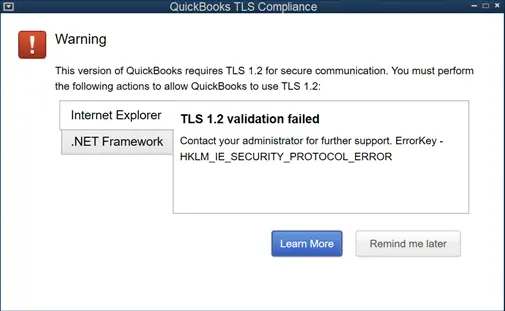
What is QuickBooks TLS Error?
QuickBooks uses Transport Layer Security (TLS) 1.2 to establish secure communication between QuickBooks Desktop and Intuit’s online services. If QuickBooks TLS 1.2 is disabled, outdated, or misconfigured, QuickBooks may fail to connect to payroll, banking, payments, licensing, and software updates.
This issue usually occurs when your Windows security settings are outdated, TLS 1.2 is disabled, or your system blocks secure internet connections.
System Requirements for TLS 1.2 in QuickBooks Desktop for Windows
To prevent QuickBooks error message TLS 1.2, confirm that you have updated your QuickBooks Desktop to the latest version to meet these requirements.
1. Operating System
- Windows 10
- Windows Server 2008 R2
- Windows Server 2012 R2
- Windows Server 2017
Important: Here is what you need to know if you are a Windows 7/ Windows 8.1 user.
2. Internet Explorer
Although Internet Explorer has been retired, QuickBooks Desktop still relies on Windows Internet Options for secure internet communication. Ensure that Internet Explorer 11 settings are properly configured.
- Exit your QuickBooks Desktop software.
- After this, update to Internet Explorer 11.
- Lastly, restart QuickBooks Desktop.
3. .NET Framework
QuickBooks needs .NET Framework 4.8 or later (recommended)version 4.8 or later (recommended). Use these steps to update the .NET Framework.
- Firstly, download .NET Framework from Microsoft’s website.
- Now, save the downloaded file to your desktop.
- Next, double-click the file and follow the on-screen instructions.
- After successfully completing the installation, reboot your computer.
Note: If you face any errors while installing .NET Framework, connect with your IT expert or Microsoft instantly.
4. Internet Explorer Group Policy
If you get an error message, connect with your IT experts or department to enable the TLS 1.2 protocol in Internet Explorer.
Refer to the Microsoft article when you have the correct IE by Internet Explorer Group Policy. But TLS 1.2 still needs setup.
5. Elevated privileges
If you receive an error message, you must run QuickBooks with elevated privileges, which creates accurate Internet security settings.
- Close the QuickBooks application.
- After this, right-click on the QuickBooks icon.
- Choose Run as Administrator.
What Causes the QuickBooks TLS 1.2 Failure Error?
The following are the major causes behind the occurrence of the QuickBooks TLS 1.2 Failure error.
- You have installed an older version of Internet Explorer.
- If you haven’t set Internet Explorer as a default browser.
- The required TLS settings in Internet Explorer are disabled.
- Your system doesn’t meet the minimum system requirements to support TLS 1.2.
- TLS 1.2 is disabled or incorrectly configured.
- Another possible reason is misconfiguration of the Internet Explorer settings.
- Sometimes, certain network or security policies might be preventing TLS 1.2 from functioning properly.
How to Fix QuickBooks TLS Error Using these Troubleshooting Methods
In this blog section, we will learn about the step-by-step troubleshooting methods to resolve the QuickBooks TLS Error smoothly.
Method 1: Enable TLS 1.2 For QuickBooks Desktop Manually
If you are using an outdated TLS protocol for secure internet connections, then you may end up with a QuickBooks TLS Compliance error. So, to fix the issue, it’s essential to enable QuickBooks TLS 1.2 manually to run the internet services smoothly.
- Open Internet Explorer 11 on your system.
- Browse to the Settings option and click Internet Options.
- Choose Advanced and then Security.
- Ensure Use TLS 1.2 is enabled. Leave other protocol settings unchanged unless instructed by Intuit or your IT administrator.
Method 2: Run the QuickBooks TLS 1.2 Tool (TLS Readiness tool)
The QuickBooks TLS 1.2 Tool checks whether your system is configured for TLS 1.2 and helps identify security-related issues. However, to run this utility, you must have an updated version of the QuickBooks Tool Hub.
Note: If you don’t have QuickBooks Tool Hub, then first download and install the latest version on your device.
- First, open the QuickBooks Tool Hub and click Installation Issues.
- Navigate to the QuickBooks TLS 1.2 Tool from the bottom right corner.
- Select OK to launch the TLS Tool and click Yes to the EULA Agreement.
- Tap on the Run option.
- Once the tool runs successfully, click on Exit.
Method 3: Set Internet Explorer as a default browser
QuickBooks supports Internet Explorer to run the online services. But if you have chosen any other web browser as a default browser, then you may encounter the QuickBooks TLS 1.2 error message. Here are the steps you need to follow to set Internet Explorer as a default browser.
- First, open the latest version of Internet Explorer and confirm that it’s configured properly.
- Select Gear icon and tap on Internet Options.
- Go to the Programs menu and select Make Default Options.
- When all the changes are made, click Apply, and then OK.
- Lastly, run QuickBooks and see if the QuickBooks TLS 1.2 warning message still appears.
Method 4: Update Internet Explorer to the Latest Version
QuickBooks requires an updated version of Internet Explorer to run the online services. The updated version currently available for Internet Explorer is 11 or higher. If it’s not updated, perform the following steps
- Use the shortcut key (Windows logo key) from your keyboard to open the Start menu.
- Enter Internet Explorer in the search box and double-tap on the Internet Explorer option.
- Click on the Gear icon from the top-right corner and then select About Internet Explorer.
- Mark the checkbox for “Install new versions automatically.”
- After that, click on the Close button.
- Lastly, try to run QuickBooks Desktop again.
Method 5: Change the Internet Explorer Settings
Misconfigured or unstable internet connection settings may trigger QuickBooks TLS 1.2 failure error. So, it’s essential to resolve this issue. Follow the steps given below to update the Internet Explorer settings.
- Windows 10 Users: Windows 10 already comes with the updated Internet Explorer 11 and TLS 1.2 enabled by default. But you should still confirm that TLS 1.2 is enabled in your system settings.
- Windows 7/8/8.1 Users: If you are a Windows 7, 8, or 8.1 user, confirm that you are using the updated version of Internet Explorer. If you prefer not to update the browser, you can enable TLS 1.2 manually through the Internet Explorer settings.
- Windows XP or Vista Users: Windows XP and Windows Vista are unsupported. Upgrade to a new version of Windows available and then use QuickBooks online services.
Follow these steps to verify if TLS 1.2 is enabled:
- Open Internet Explorer and click on the Gear icon.
- Choose Internet Options > Security tab > Globe icon.
Important Tip: Confirm that you have set the security to medium-high instead of high.
- Select Never Dial a Connection option. If you are using the dial-up node on the system, confirm that you have chosen the right ISP under the Connections tab.
- Now, tap on OK and select LAN Settings. Also, ensure that you have marked the Automatically Detect Settings checkbox.
- Next, disable the “Use a Proxy Server” option. If not, then provide the complete address and port. If you haven’t set the port to 80, then don’t unmark the “Use a Proxy Server” checkbox.
- Click OK and choose the Advanced > Restore Advanced Settings option.
- You must scroll down to the Use TLS 1.0 checkbox.
- Moreover, ensure that the TLS 1.0 checkbox is unmarked. Ensure that Use TLS 1.2 is enabled. Do not modify other protocol settings unless instructed by Intuit or your IT administrator.
- Again, click OK and exit Internet Explorer to save all the changes.
- Finally, restart your workstation and see whether the issue still exists.
Method 6: Log in to Windows as an Administrator
Sometimes, if users don’t have enough system permissions, it can prevent QuickBooks from accessing required security settings. So, perform the steps below to log in as an administrator in Windows.
- Open Internet Explorer and click the Gear icon.
- Choose Internet Options > Security tab > Globe icon.
- Now, browse to Never Dial a Connection. If your system uses a Dial-Up Network (DUN), ensure that the correct ISP is selected below the Connections tab.
- Tap on OK, open LAN Settings, and select the Automatically Detect Settings checkbox.
- After this, disable the Use a Proxy Server option. If a proxy is required, provide the correct address and port number. If the port is not set to 80, enable the proxy option. Otherwise, you can also disable it.
- Next, click OK and head to the Advanced > Restore Advanced Settings.
- Herein, scroll down until you see the Use TLS 1.0 option.
- Verify that you have selected the TLS 1.0 checkbox. Also, confirm that you leave the Use TLS 1.1 and Use TLS 1.2 unmarked.
- Again, tap on OK and exit from Internet Explorer to save the changes.
- Lastly, restart your computer and check if the error still persists.
Method 7: Repairing QuickBooks Desktop Manually
If the above solutions don’t work, then try to repair the damage in QuickBooks Desktop manually.
- Launch the Start menu, type Control Panel in the search box.
- Select Control Panel from the search results to open it.
- Click Programs and Features or Uninstall a Program.
- Look for QuickBooks Desktop from the available results and select Uninstall/Change.
- From the QuickBooks Installation window that opens, tap on the Repair option.
- Select Next and go through the on-screen instructions to finish the manual repair process.
- After completing the repair process, relaunch your computer. Then open QuickBooks again to check if the QuickBooks error message TLS 1.2 still appears.
Final Thoughts
QuickBooks TLS errors occur when the application cannot establish a secure connection using TLS 1.2. Enabling TLS 1.2, updating Windows and QuickBooks Desktop, and verifying your Internet security settings can resolve most TLS-related issues. Performing regular software updates and maintaining supported system configurations will help prevent future errors.
Frequently Asked Questions
What is QuickBooks TLS 1.2 validation failed error?
The QuickBooks TLS 1.2 validation failed error occurs when your computer can’t connect to Intuit servers because of missing or disabled TLS 1.2. So, to fix this issue, Intuit requires all connections to use TLS 1.2.
Why does QuickBooks Desktop have a TLS 1.2 error?
The QuickBooks Desktop TLS 1.2 error appears when your system fails to establish a secure internet connection with the Intuit servers because TLS 1.2 is disabled, outdated, or incorrectly configured.
How do I update QuickBooks to TLS 1.2?
To update QuickBooks to TLS 1.2, install the latest QuickBooks Desktop updates and Windows security updates. After this, enable TLS 1.2 in Internet Options > Advanced > Security. Then, restart your computer and re-open QuickBooks to apply the changes.
How can I prevent QuickBooks TLS Errors in the future?
To prevent QuickBooks TLS errors, keep your QuickBooks Desktop updated, install the latest Windows updates, ensure TLS 1.2 is enabled, run a supported version of Windows, check firewall settings, and back up your company files regularly.
What is the QuickBooks TLS Update Error?
The QuickBooks TLS update error occurs when QuickBooks cannot establish a secure TLS 1.2 connection while downloading updates. So, to fix the issue, try updating Windows, enabling TLS 1.2 for QuickBooks Desktop, and installing the latest QuickBooks version.
About The Author

Jonathan Browns
Jonathan Brown is a trained QuickBooks professional with 10 years of experience in the accounting sector. Moreover, he is passionate about helping businesses reduce the stress of managing accounts. Also, he is proficient in assisting entrepreneurs and small business owners to use QuickBooks and enhance their accounting experience.
Recent Posts
-
Record Opening Balance in QuickBooks: Step-by-Step Guide
-
QuickBooks FCS Service Is Damaged: Why It Happens & How to Fix It
-
How to Recover Your Intuit Account: A Complete, Step-by-Step Guide
-
QuickBooks Online Essentials: The Complete Guide
-
QuickBooks Sales Tax Rounding Error: Causes & How to Fix It Fast
Need Assistance Right Away?
You can connect with a live representative to get help with your query or issue.