


QuickBooks Running Slow? Causes and Easy Fixes

- By Jonathan Browns
- Oct 08, 2026
- Accounting
- 7 min read
Nothing can be more frustrating than working on important business tasks and suddenly finding that QuickBooks is running slow. You may experience delays when opening a company file, switching tabs, processing payroll, or working in multi-user mode. In some cases, QuickBooks keeps freezing or becomes QuickBooks Not Responding, especially when the company file is large or the software is outdated. This guide explains why QuickBooks is running so slow and how to troubleshoot common performance issues in QuickBooks Desktop and Online.
If QuickBooks Desktop is slow to open, takes a long time to load the company file, or QuickBooks Desktop keeps freezing, first close unnecessary background applications and restart the computer. If the problem continues, check the QuickBooks installation, company file, QBWUSER.INI file, and system requirements. You can also review our guide on QuickBooks Won’t Open for additional troubleshooting steps and use the QuickBooks File Doctor Tool to check common company-file, network, and multi-user issues.
Why Is QuickBooks Running Slow? Common Causes
QuickBooks running slow can happen because of problems with the software, company file, computer, browser, or network. The possible causes can vary depending on whether you use QuickBooks Desktop or QuickBooks Online.
QuickBooks Desktop
- A damaged or missing QBWUSER.INI file.
- Your computer does not meet the required system specifications.
- Damaged or outdated Windows components.
- Damaged QuickBooks program files or installation.
- An outdated or unsupported QuickBooks Desktop version.
- A large company file containing extensive transaction data.
- Network or hosting problems when using QuickBooks in multi-user mode.
- Insufficient system resources or too many background applications.
QuickBooks Online
- Slow or unstable internet connection.
- An outdated or unsupported web browser.
- Excessive browser cache and cookies.
- Browser extensions affecting QuickBooks Online.
- Large reports or extensive transaction data.
- Computer performance or system-resource limitations.
- Temporary browser or QuickBooks Online service issues.
Quick Diagnosis: What Is Making QuickBooks Slow?
Before applying troubleshooting steps, identify when the slowdown occurs:
| QuickBooks problem | Possible reason |
|---|---|
| QuickBooks Desktop is slow to open | Large company file, damaged program files, or QBWUSER.INI issue |
| QuickBooks is slow when opening a company file | Large or damaged company file, folder permissions, or network issue |
| QuickBooks keeps freezing | Damaged program components, limited system resources, or company-file problems |
| QuickBooks shows Not Responding | Background processes, damaged installation, or insufficient resources |
| QuickBooks is slow over a network | Network connection, hosting configuration, or server-related issue |
| QuickBooks is slow in multi-user mode | Network, hosting, company-file size, or Database Server configuration |
| QuickBooks is running slow after an update | Incomplete update, compatibility issue, or damaged program components |
| QuickBooks is running slow on Windows 11 | System compatibility, outdated software, or limited system resources |
| QuickBooks Online is slow | Browser cache, extensions, internet connection, or large data/report activity |
QuickBooks Desktop Slow to Open or Keeps Freezing
If QuickBooks Desktop is slow to open, takes a long time to load the company file, or QuickBooks Desktop keeps freezing, the problem may be related to damaged program files, a large company file, insufficient system resources, or an outdated QuickBooks version. In some situations, QuickBooks may also display a Not Responding message while opening or working with the company file.
Quick Solutions to Overcome Slow QuickBooks Performance
QuickBooks can run slowly in both the Online and Desktop versions. The troubleshooting steps below cover common performance issues for each version.
QuickBooks Online
Case 1: How to Fix QuickBooks Online When It Is Running Slow
If QuickBooks Online is running slow, the cause may be related to your internet connection, browser, cache, cookies, extensions, or computer performance. Try the following solutions before moving to more advanced troubleshooting.
Solution 1: Check the System Requirements to Run QuickBooks Online
Sometimes, users may experience a QuickBooks Online running slow issue when they fail to meet the basic system requirements to operate the software seamlessly.
1. Suggested Operating System and Internet Speed
The following are the operating systems that are supported by the QuickBooks Online application.
- Windows PC: Windows 10, Intel Core i5 or comparable processor (2015 or newer) with at least 4 GB of RAM.
- Mac: OS X “Big Sur” 11.1 or newer.
- Internet Connectivity: A 3 Mbps or higher version is supported.
2. Basic Operating System and Internet Speed
Make sure that QuickBooks meets the basic necessities to run the software efficiently.
- Windows PC: Windows 10, Intel Core i3 or a comparable processor (2013 or newer) with at least 2 GB of RAM.
- Mac: OS X El Capitan 10.11 or newer.
- Internet connection: 1.5 Mbps.
3. Supported Web Browsers
The following are the web browsers which is compatible with running the QBO application.
- Google Chrome: Version 78 or newer
- Mozilla Firefox: Version 76 or newer. Note: To preview and print forms on Mac OS, you’ll also need the Firefox PDF plugin.
- Microsoft Edge: version 75 or newer
- Safari: version 12 or newer (Mac only)
Mobile Web browsers
Herein, we mentioned the web browsers that are supported in the mobile browsers.
iPhone / iPad
- OS 11.1 or newer
- Safari browser. Note: Make sure Private Mode is off to allow cookies.
- Other browsers, such as Chrome and Dolphin, may work but aren’t officially supported.
Android smartphones and tablets
Nougat 7.1.1 or newer
- Chrome browser
- Other browsers, such as Firefox and Opera, may work but aren’t officially supported.
Microsoft Surface
Microsoft Edge
Solution 2: Test Your Internet Connectivity By Running a Speed Test
To check that your system is well-connected with a stable internet connection, run a speed test on your browser.
- Open your Chrome browser and type internet speed test in the search bar.
- After this, hit the Run Speed Test option.
- By this, it will start running a test and will let you know about the downloading speed and uploading speed.
Solution 3: Check That You are using the updated Chrome Browser
If you are getting QuickBooks Online problems, then try updating the Chrome browser.
- Open the Chrome menu on your system.
- Choose the Help menu and then click on About Google Chrome.
- If you see that you are using the old Chrome browser, then update it to resolve the QBO issues.
Solution 4: Test QuickBooks Online in Incognito Mode
If QuickBooks Online is running slow, open it in an Incognito or Private browsing window. This provides a quick way to determine whether browser cache, cookies, or extensions are contributing to the performance problem.
If QuickBooks Online works normally in Incognito mode, return to your regular browser and clear its cache and cookies. You should also review browser extensions that may be affecting QuickBooks Online.
Note: Incognito mode should be used as a troubleshooting test rather than a permanent solution.
Solution 5: Remove the Browsing History, Cookies & Cache files
You might be wondering why my QuickBooks Online is running so slowly? It may be due to the storage of excessive browsing history, cache files, and cookies, which hampers the application’s performance. So, to resolve the issue, try deleting the unnecessary browsing history.
Chrome Browser
- Launch the Chrome browser, right-click on the three vertically presented dots at the top right corner.
- From the options, tap on the History option and then again click the History tab.
- Now, hit the Delete Browsing Data from the left panel.
- Tick-mark the checkboxes next to the browsing history that you want to delete.
- Also, choose the time range till the time you wish to delete the data.
- Finally, head to the Delete Data tab.
Safari Browser
- Launch the Safari browser on your device and tap on Preferences.
- Browse to the Privacy section and choose the Manage website Data tab.
- Now, insert intuit and press the Enter key.
- Head to the Remove All option and then tap on the Remove Now tab.
- Once you are all set, try relaunching the Safari browser.
QuickBooks Desktop
Case 2: What to Do When QuickBooks Desktop Is Running Slow
When QuickBooks Desktop is running slow, the problem may be related to the QuickBooks installation, company file, Windows environment, system resources, or network configuration. The following solutions can help identify and troubleshoot common performance problems.
QuickBooks Desktop Is Slow to Open or Keeps Freezing
If QuickBooks Desktop is slow to open, takes a long time to load the company file, or QuickBooks Desktop keeps freezing, first close unnecessary background applications and restart the computer. If the problem continues, check the QuickBooks installation, company file, QBWUSER.INI file, and system requirements.
A damaged program file can also cause QuickBooks Not Responding or make the application take longer to load. In these situations, repairing the QuickBooks program and checking the company file can help identify the cause of the slow performance.
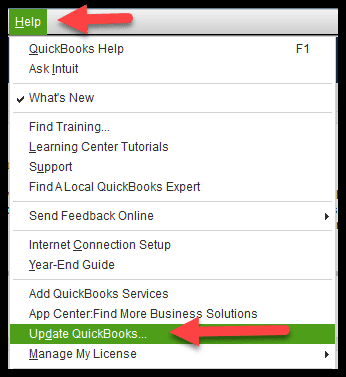
Solution 1: Update QuickBooks Desktop to Troubleshoot Slow Performance
QuickBooks running slow after an update may occur when an update is incomplete or when existing program components need to be refreshed. Keeping QuickBooks Desktop updated can help address software bugs, compatibility issues, and performance problems.
Before continuing with other troubleshooting steps, make sure QuickBooks Desktop is completely updated and then restart the computer. Open QuickBooks again and check whether the performance has improved.
Solution 2: Repair QBWUSER.INI to Troubleshoot Slow QuickBooks
A damaged or missing QBWUSER.INI file may affect QuickBooks Desktop performance and cause the application to load slowly or become unresponsive. Renaming the file allows QuickBooks to create a new configuration file.
Follow the existing QBWUSER.INI steps below to rename the file and then reopen QuickBooks Desktop.
- Access the folder containing the QBWUSER.INI file. This file is mainly situated in “Users [Your user name]AppDataLocalIntuitQuickBooks [year]”.
- Now, right-click on the QBWUSER.INI file and tap on Rename.
- Insert “.OLD” at the end of the file name, and it will appear as QBWUSER.INI.OLD.
- Also, change the name of the EntitlementDataStore.ecml file.
- Next, try launching the QuickBooks Desktop once again.
- Now, if you are able to launch the QuickBooks program after changing the name of the QBWUSER.INI file or EntitlementDataStore, ecml, then try launching the data file.
- If you are unable to launch the same company on your own, copy the file to a separate folder. You must launch it through a new location. If the file opens, it states that the issue is with the folder or folder permissions.
- If you fail to log in to your file, it states that your data file is damaged.
Solution 3: Check the System Requirements of QuickBooks Desktop
Sometimes, the users might get the QB Desktop running slow issue when the Desktop fails to meet the basic system requirements to run the application. Therefore, it is necessary to check the system requirements for QuickBooks Desktop 2024.
Solution 4: Configure the Damaged/ Corrupt QuickBooks Data File
At times, the presence of damage or corrupt company files might create issues while running the QuickBooks Desktop application efficiently. Here comes a time when you must use Verify and Rebuild Data in QuickBooks Desktop to configure the damages.
Solution 5: Get the Latest Windows Operating System Update
Working on an older Windows operating system might create problems while running the QuickBooks Desktop application. So, to fix the overall performance issues of the QuickBooks application, it’s best to update Windows.
- Tap on the Windows Start menu and look for the Settings menu.
- After that, choose the Windows Update option from the left panel.
- Select the Check For Updates option.
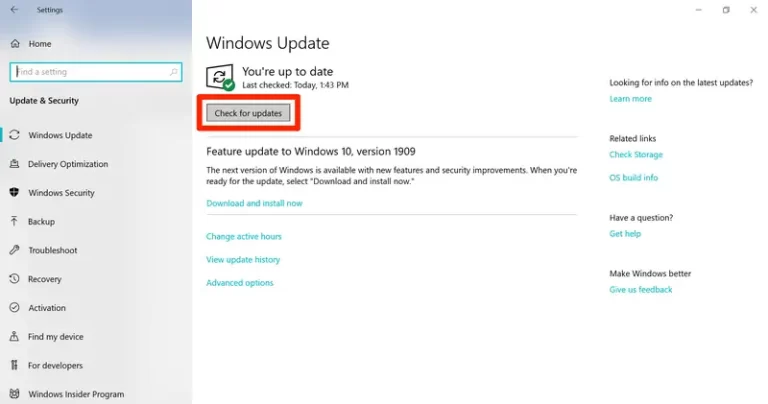
- Next, hit the Download and Install option if any new updates are available.
- Once it is updated, you will see the “You’re Up to Date” message.
- At last, relaunch your PC and launch QuickBooks to see if it is working properly.
QuickBooks Running Slow on Windows 11
If QuickBooks is running slow on Windows 11, first check whether your QuickBooks Desktop version and computer meet the required system specifications. Outdated Windows components, limited system resources, background applications, or software compatibility issues can also affect performance.
Keep both Windows and QuickBooks Desktop updated, close unnecessary applications, and check whether the problem occurs with one company file or all company files. This can help determine whether the problem is related to the QuickBooks program, company file, or computer environment.
Solution 6: Check the Company File Size
A large QuickBooks company file can contribute to slow performance, particularly when opening the company file, generating reports, or working with extensive transaction data. If you are also seeing an error while opening or accessing the company file, see our guide on QuickBooks Error 6000, which covers common company-file, network, hosting, and folder-permission issues.
To check the size of your QuickBooks company file, open the company file folder, right-click the data file, and select Properties. Review the file size before deciding whether additional data-management steps are necessary.
Important: Company-file size is only one possible cause of slow QuickBooks performance. A large file does not automatically mean that the file is damaged or that it must be replaced.
- Open your QuickBooks company file folder, right-click on the data file.
- Choose the Properties tab and then start reviewing the file size.
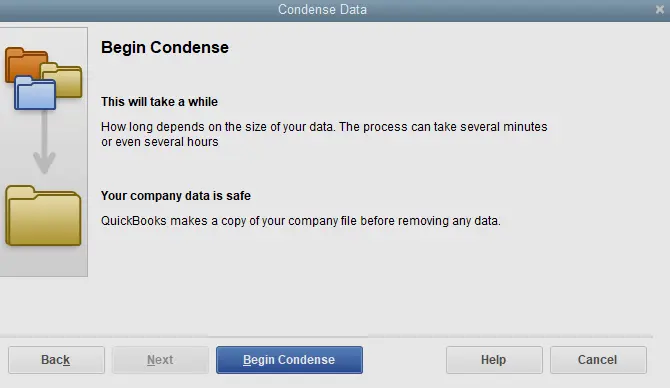
- In case you are using QuickBooks Desktop Pro and the data file size exceeds 150 MB, start running the QuickBooks Condense Data Utility to minimize the file size.
- Similarly, if you are a QuickBooks Desktop Enterprise user, you must ensure that the file size does not exceed 1 GB.
- Now, generate a new data file from scratch. For that, you must implement the steps below.
- Move to the File menu, hit the New Company option. Then, use the instructions given on the screen to move further.
- Launch your original data file and then start exporting your lists.
- Open the exported Intuit Interchange files (IIF) and remove list entries you won’t require any longer.
- Now, begin importing clean files into the new file.
- At last, set up the opening balances.
QuickBooks Slow in Multi-User Mode
QuickBooks slow in multi-user mode can occur when multiple workstations access the same company file through a network. A slow or unstable network connection, incorrect hosting configuration, company-file issues, or server configuration can affect performance. If QuickBooks cannot communicate properly with the computer hosting the company file, issues such as QuickBooks Error H202 may also occur.
If QuickBooks is slow over the network, check the connection between the server and workstations. Also verify that QuickBooks is configured correctly for multi-user access and that the company file is stored in an appropriate shared location. If multi-user access is not working correctly, see our guide on QuickBooks Multi-User Mode Not Working for additional troubleshooting steps.
If QuickBooks works normally in single-user mode but becomes slow in multi-user mode, focus your troubleshooting on the network, hosting configuration, and server environment.
Network-related performance problems may also involve incorrect hosting settings, firewall restrictions, or damaged .ND and .TLG files associated with the QuickBooks company file.
Solution 7: Run Quick Fix My Program to Troubleshoot Slow QuickBooks
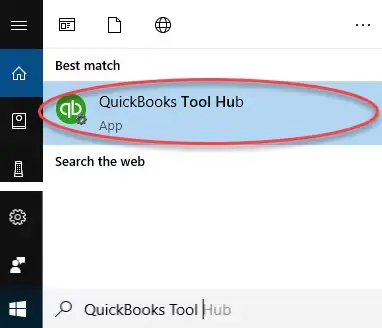
Damaged QuickBooks program components can contribute to slow QuickBooks performance, freezing, or QuickBooks Not Responding. Quick Fix My Program in QuickBooks Tool Hub can close QuickBooks background processes and help troubleshoot certain program-related problems.
Download and open QuickBooks Tool Hub, select Program Problems, and then choose Quick Fix My Program. After the process finishes, reopen QuickBooks Desktop and check whether the performance has improved.
Solution 8: Use the QuickBooks Install Diagnostic Tool Via the Tool Hub
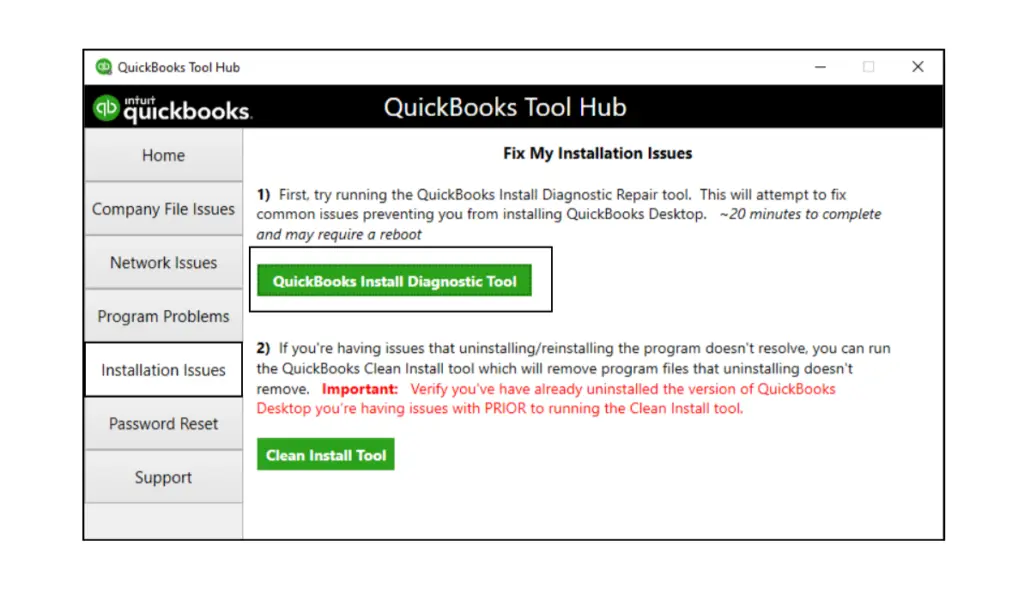
Installation problems can cause QuickBooks to load slowly, freeze, or become unresponsive. Running the QuickBooks Install Diagnostic Tool can help identify and repair certain installation-related issues.
Solution 9: Perform a Fresh Installation if QuickBooks Keeps Freezing
If QuickBooks Desktop keeps freezing, remains unresponsive, or continues to run slowly after repairing the program, a fresh installation may help address damaged or corrupted installation files.
Before reinstalling QuickBooks Desktop, make sure your important company files and backups are available. After completing the installation, open QuickBooks and check whether the slow performance or freezing problem continues.
How to Prevent QuickBooks From Running Slow
Follow these practices to help maintain QuickBooks performance:
- Keep QuickBooks Desktop updated.
- Use a stable internet connection for QuickBooks Online.
- Close unnecessary background applications.
- Monitor the size and performance of your company file.
- Keep Windows and supported browsers updated.
- Avoid using an unstable network for multi-user company files.
- Clear unnecessary browser cache and cookies when troubleshooting QuickBooks Online.
- Use the recommended system requirements for your QuickBooks version.
Conclusion
QuickBooks running slowly is a major issue that not only affects the program’s performance but also makes it challenging for users to accomplish their tasks. So, it is necessary to get rid of this issue asap using the solutions given above in this post. Make sure to keep your QuickBooks updated and your system well-connected with good internet connectivity.
For any additional help, you can connect with our BizBooksAdvice professionals for guidance.
Frequently Asked Questions
1. Why Is QuickBooks Running So Slow?
QuickBooks may run slowly because of a large company file, outdated software, damaged program files, insufficient system resources, browser issues, or network problems. The cause can vary between QuickBooks Desktop and QuickBooks Online.
2. Why Is QuickBooks Desktop Slow to Open?
QuickBooks Desktop may be slow to open because of a large company file, damaged program files, QBWUSER.INI issues, outdated software, or limited system resources. Check the QuickBooks installation and company file if the problem continues.
3. Why Does QuickBooks Keep Freezing or Show Not Responding?
QuickBooks may keep freezing or display a Not Responding message because of damaged program components, company-file problems, insufficient system resources, or network issues. Running Quick Fix My Program can help troubleshoot certain program-related problems.
4. Can a Large Company File Make QuickBooks Slow?
Yes. A large company file can contribute to slower QuickBooks Desktop performance, especially when opening the file, generating reports, or working with extensive transaction data.
5. Why Is QuickBooks Slow in Multi-User Mode?
QuickBooks can become slow in multi-user mode because of network performance, hosting configuration, company-file size, or server-related problems. If QuickBooks is slow over the network, check the connection between the server and workstations.
6. Why Is QuickBooks Running Slow After an Update?
QuickBooks may run slowly after an update if the update was incomplete, program components need repair, or a compatibility issue is affecting the system. Make sure QuickBooks is completely updated and restart the computer.
7. Why Is QuickBooks Running Slow on Windows 11?
QuickBooks may run slowly on Windows 11 because of outdated software, system-resource limitations, background applications, or compatibility issues. Check the system requirements and keep Windows and QuickBooks updated.
8. Can SSD Improve QuickBooks Performance?
An SSD can improve overall computer responsiveness and may reduce the time required to open applications and access files. However, storage speed is only one factor affecting QuickBooks performance.
9. How Much RAM Does QuickBooks Need?
The required RAM depends on the QuickBooks Desktop version and system configuration. Check the applicable system requirements for your specific QuickBooks version before upgrading hardware.
10. Why Do QuickBooks Reports Load Slowly?
Reports may load slowly because of a large company file, extensive transaction data, network performance, browser-related issues, or limited system resources.
About The Author

Jonathan Browns
Jonathan Brown is a trained QuickBooks professional with 10 years of experience in the accounting sector. Moreover, he is passionate about helping businesses reduce the stress of managing accounts. Also, he is proficient in assisting entrepreneurs and small business owners to use QuickBooks and enhance their accounting experience.
Recent Posts
-
How to Fix QuickBooks Error 1603 During Installation or Updates
-
How to Fix QuickBooks Error 248 With Expert Tips? [Complete Guide]
-
QuickBooks Banking Error 350: Effective Solutions for Online & Desktop
-
How to Fix QuickBooks Missing PDF Component Error
-
QuickBooks Running Slow? Causes and Easy Fixes